Moon Landing Fact Check
Examining Apollo Mission Evidence: Debunking Conspiracy Theories With Science
A comprehensive, single-page fact-checked report designed for PDF export.
Introduction
Since the historic Apollo 11 landing in 1969, conspiracy theories have circulated online suggesting the event was staged by NASA. Claimants often cite the "fluttering" flag, the absence of stars in photographs, and the fact that humans haven't returned to the Moon as evidence. This report systematically debunks these notions with scientific facts, third-party proof, and original mission data, using credible sources and compelling imagery.
1. The "Fluttering Flag": Physics and Engineering
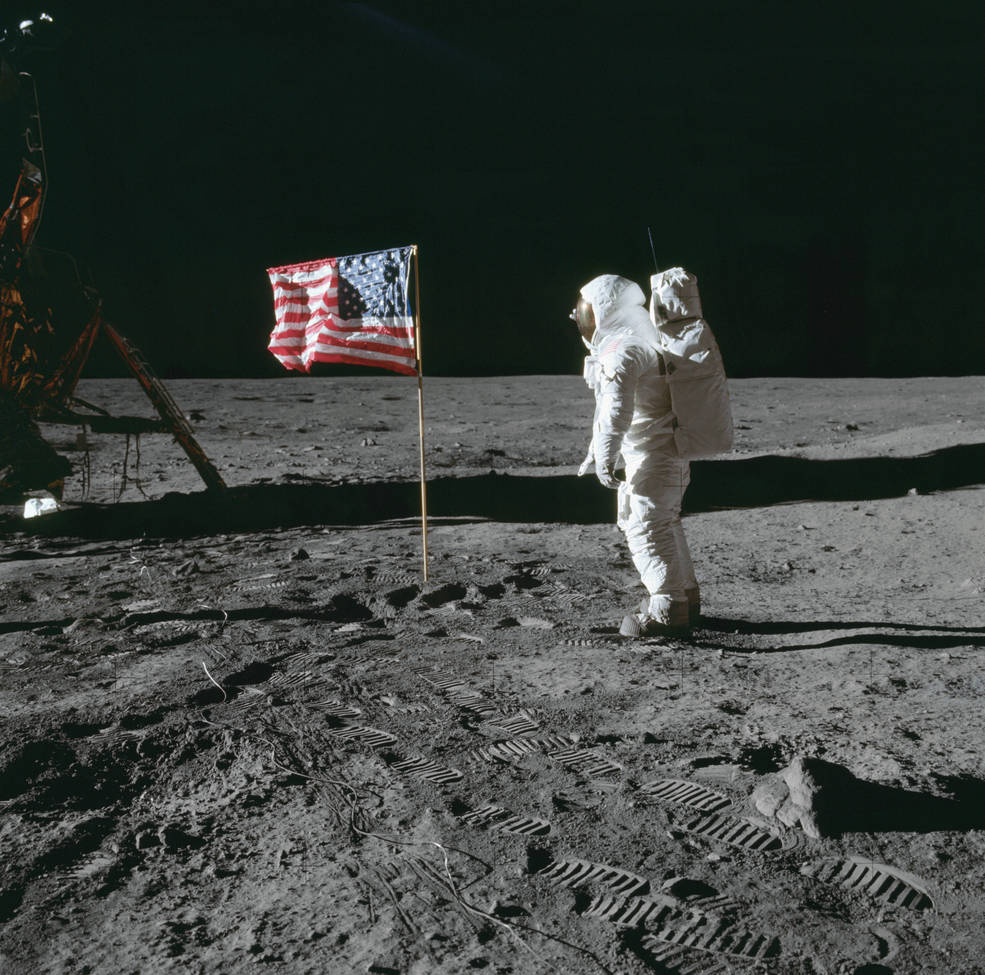
Claim: The US flag appears to wave in Apollo images, which shouldn't happen without wind.
Fact: The flag had a special horizontal support rod to keep it extended in the airless lunar environment. The apparent "fluttering" resulted from the motion of astronauts twisting the pole into the lunar soil, and the lack of air meant the flag stopped moving slowly, rather than being dampened quickly as on Earth.
- No wind: The flag only moved while the pole was being handled; it stayed motionless afterward. Because there's no air to stop movement, the flag briefly oscillated after being touched (History.com).
- Flag design: The top of the flag was supported by a telescoping horizontal rod, making it look rippled when not fully extended (NASA history).
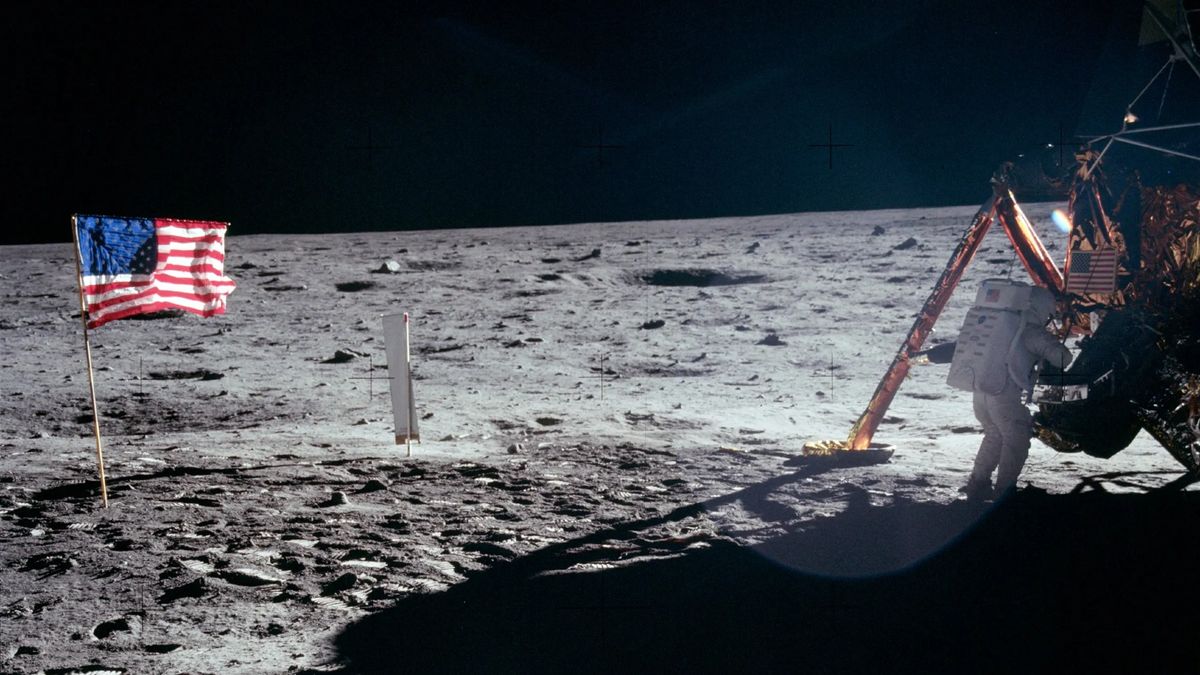
2. "No Stars" in Lunar Photographs: Camera Exposure Basics
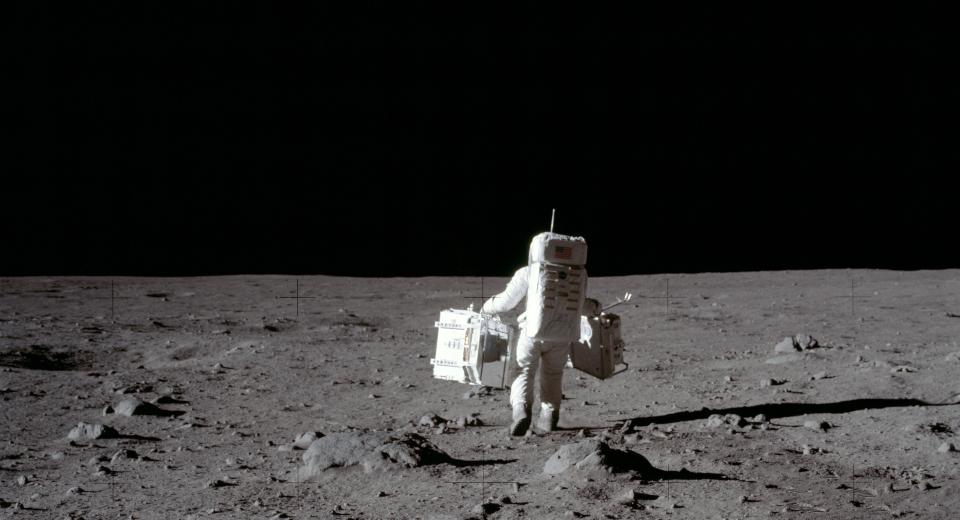
Claim: There are no stars in any Apollo images, suggesting they were staged indoors.
Fact: Stars are absent simply because of the camera exposure settings. The Moon's surface is brightly lit by the Sun; to properly expose the astronauts and the lunar scenery (which are brightly illuminated), the camera shutter speed was short and aperture was small, so faint stars in the sky were too dim to appear in the photos (RMG, UK).
- Daylight conditions: On the airless Moon, with no atmosphere, the sky is black but stars are simply too dim to register in fast-exposure photography used to capture the bright foreground.
- Real-world demo: The same effect happens if you take a photo of a lit building at night—the building is clear, stars are absent.
3. "Why Haven't We Returned?": Practical and Financial Reality
Claim: Humans haven't gone back to the Moon, so the first landing was fake.
Fact: Environmental, financial, and political realities halted further Apollo missions after 1972. The Apollo program (especially after the lunar race was won) was deemed too costly to continue amidst other priorities, and NASA's funding was drastically cut.
- Artemis Program: NASA has already begun returning to the Moon through the Artemis program, which aims to send the next humans back to the lunar surface in the late 2020s.
- Ongoing Missions: Dozens of robotic landers—including recent missions from India, China, and Japan—have visited and explored the Moon in detail (Wikipedia).

4. Direct Physical Evidence: Moon Rocks and Third-Party Confirmation

Moon rocks: Over 382 kg (842 pounds) of lunar rocks and regolith were returned by Apollo astronauts. Scientists worldwide have examined these; their composition matches lunar samples collected robotically decades later by the Soviet Luna missions, and they are distinct from terrestrial rocks (Scientific American).
- Third-party evidence: Lunar rocks have been independently studied and confirmed as extraterrestrial by research teams from many non-NASA nations—including the USSR during the Cold War (Wikipedia).
5. Imaging the Landing Sites: Modern Satellites Prove the Landings
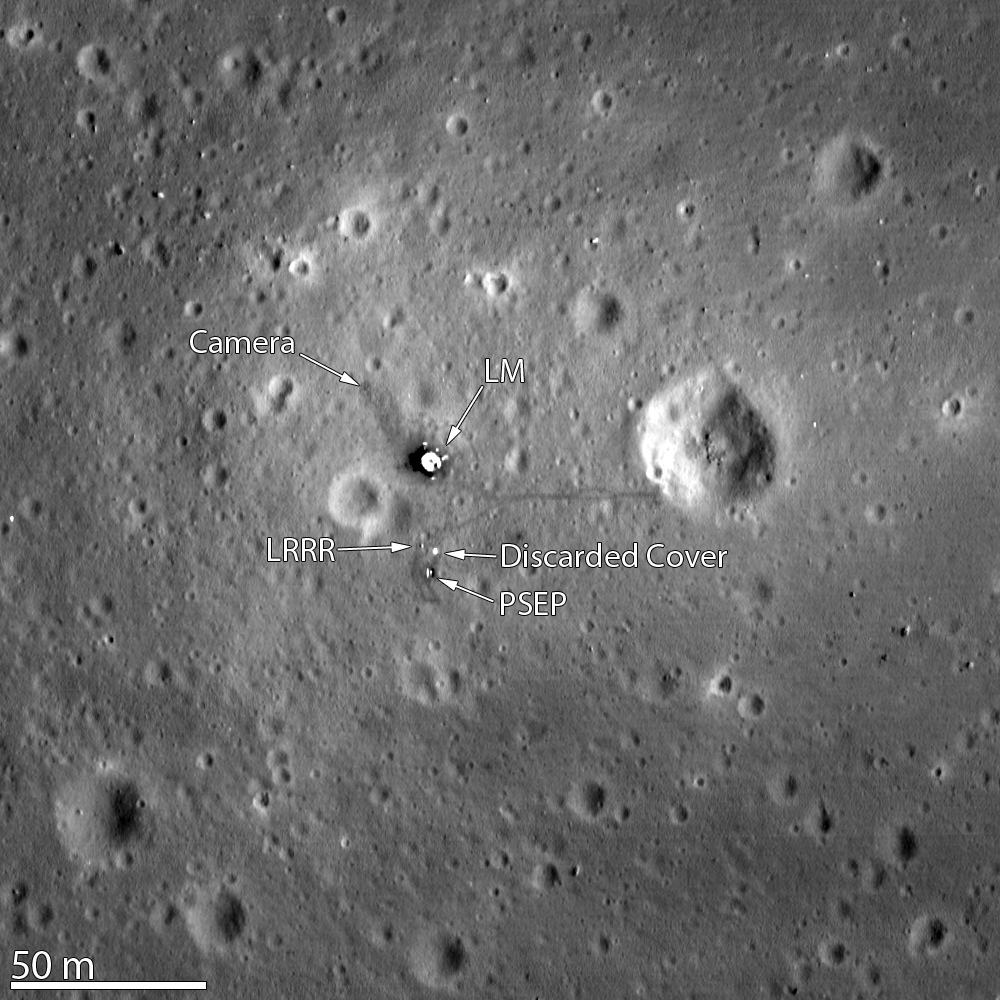
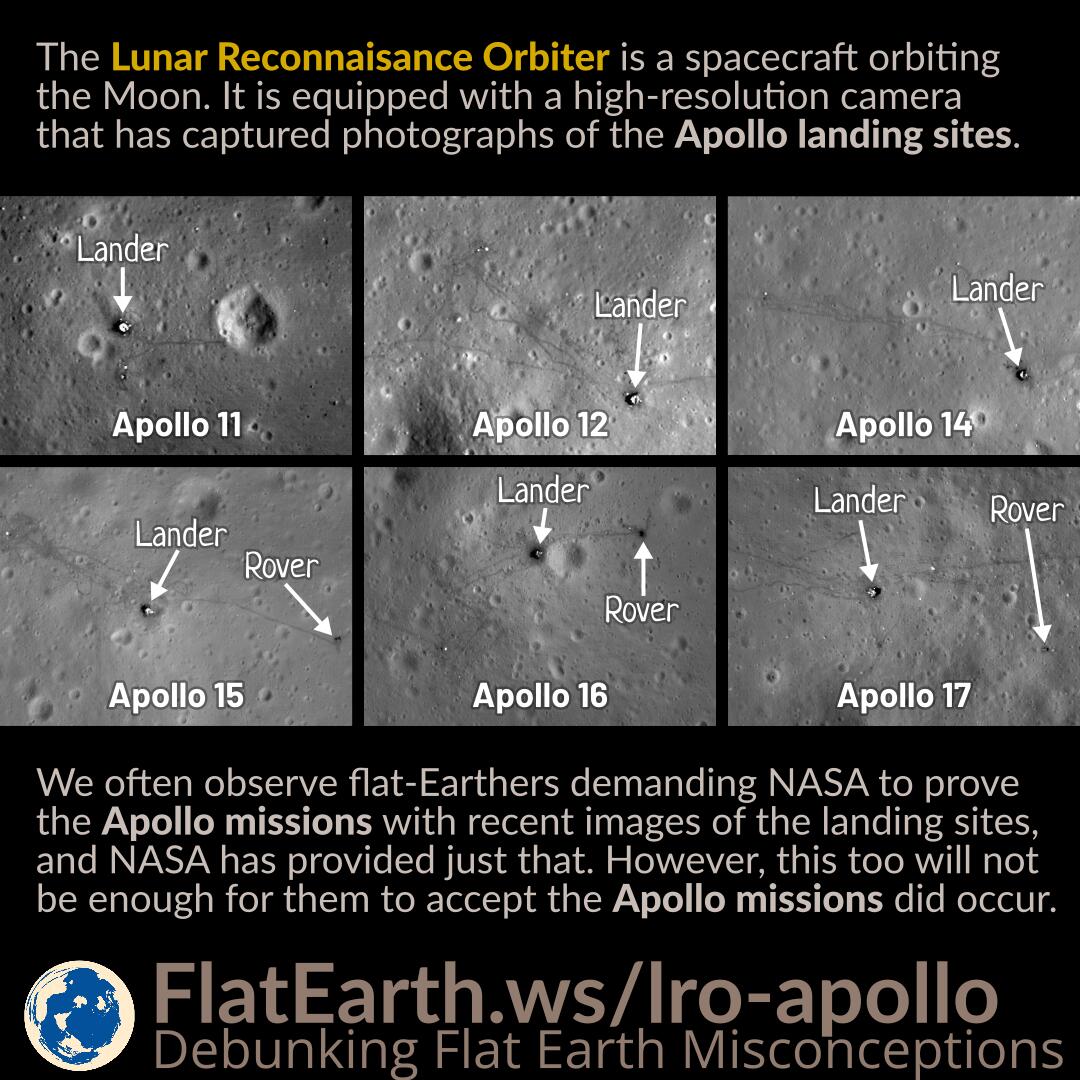
Fact: NASA’s Lunar Reconnaissance Orbiter (LRO) has imaged every Apollo landing site. You can see descent modules, science experiments, rover tracks, even the shadows of flags left behind—irrefutable proof by a spacecraft launched more than 40 years after Apollo.
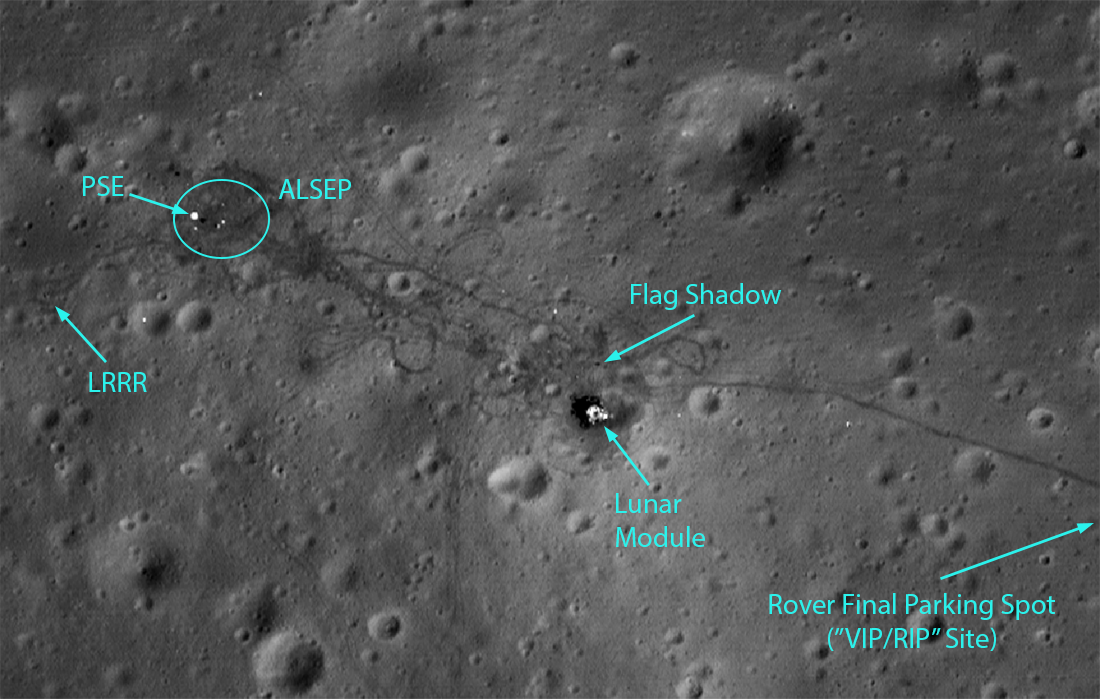
Detailed satellite evidence: The high-resolution LRO images reveal all six Apollo landing sites with clear images of equipment, rover tracks, and scientific gear still in place.
Conclusion: Science Over Conjecture
The Apollo Moon landings are among the most well-documented events in human history. Conspiracy theories fade under the light of overwhelming evidence: physics, engineering, global scientific analysis, and verification by modern spacecraft and independent nations. The photos are real, the science is sound, and the legacy lives on—on the lunar surface, in moon rocks in labs, and in the new rockets preparing to return us to the Moon.
Further reading: